Reducing Front Desk Workload at an Indian Clinic
A practical look at which reception tasks automation handles well, what it costs, and where a human still needs to be in the loop.
Front desk staff at a small clinic in India typically handle booking calls, appointment confirmations, patient reminders, basic intake questions, and follow-up messages — often at the same time. Automating even two or three of those tasks changes the day meaningfully for a one- or two-person reception team.
The question worth asking is not 'can AI replace my receptionist' but rather: which specific tasks take the most time and carry the least variation? Those are the tasks where automation is most reliable.
Tasks that are realistic candidates for automation
Booking and rescheduling calls follow a clear pattern. A patient calls, checks availability, picks a slot, and gets a confirmation. An AI voice agent can handle that exchange in Hindi, English, or a regional language, confirm the slot against the live calendar, and send a WhatsApp or SMS confirmation — without the receptionist picking up the phone.
Appointment reminders are the other high-volume, low-variation task. Sending a reminder one day before and a follow-up two hours before an appointment is repetitive work that staff do manually in many clinics. An automated system can do this at scale, for every patient, without anything falling through.
Basic intake questions — 'do you have your previous reports?', 'have you eaten before your procedure?' — can be sent as a structured WhatsApp message the evening before. The patient responds, and that information reaches the doctor before the appointment begins.
Post-visit follow-up messages ('how are you feeling after your treatment?', 'your next review is due in three months') are another category. These are rarely done consistently because staff are busy. Automation makes them consistent.
Where automation does not work cleanly
Complex or emotionally sensitive calls still need a human. A patient calling about unexpected symptoms, a complaint, or a billing dispute should reach a staff member, not an automated system.
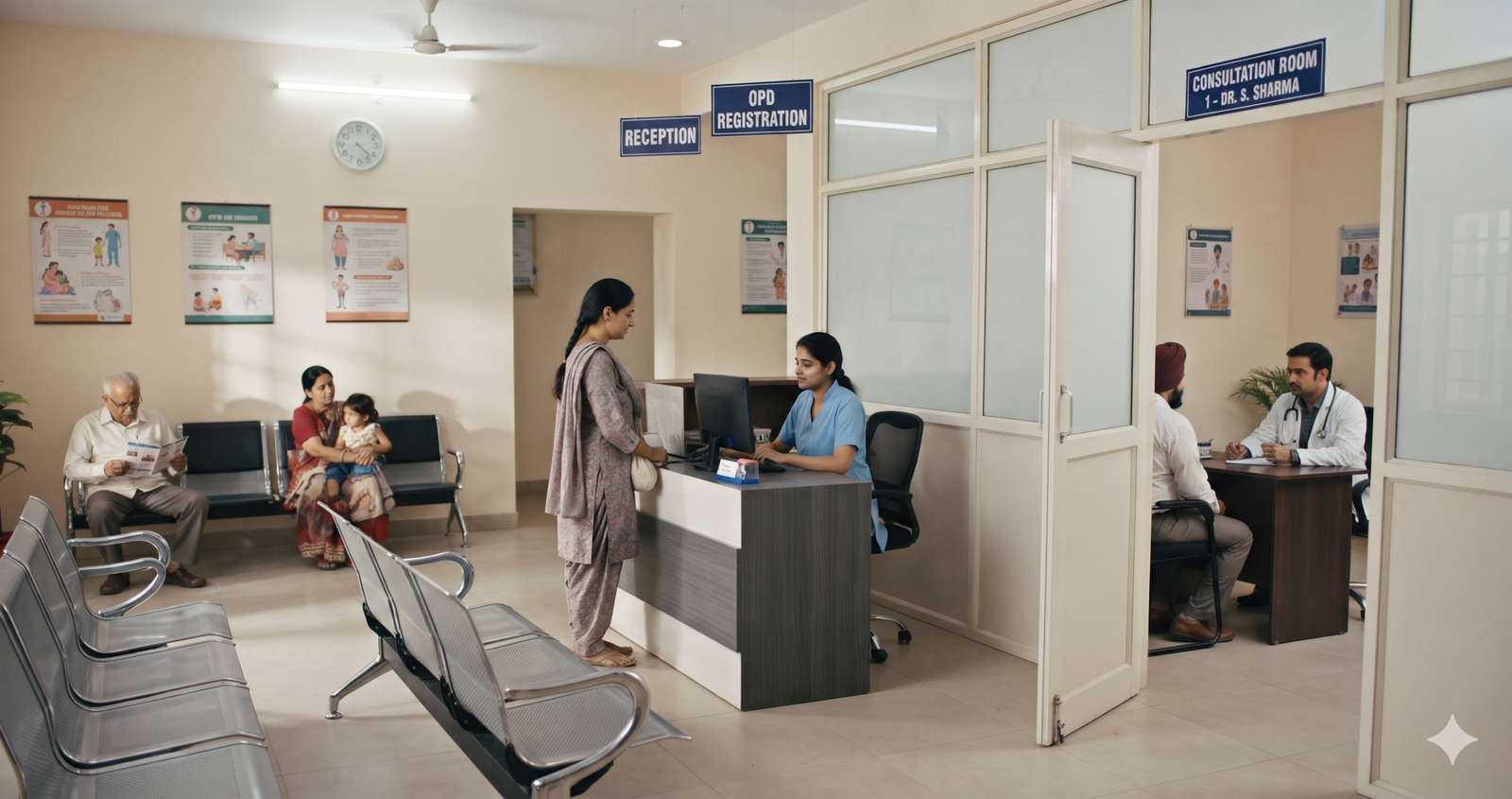
Walk-in registration and on-site coordination — managing a waiting room, handling late arrivals, communicating between front desk and doctor — cannot be automated remotely.
Insurance pre-authorisation and claims queries are still largely manual processes in most Indian clinic contexts and require human judgement and documentation skills.
The practical approach is to automate the predictable, high-volume tasks and make sure there is a clear handoff to a human for anything outside that boundary.
Costs in broad market terms
For a small to mid-sized clinic, the cost of a purpose-built AI booking and reminder system in India generally falls in the range of ₹30,000 to ₹1,50,000 for initial setup, with monthly usage or maintenance fees varying by vendor and call volume. These are general market ranges; actual quotes depend on the complexity of the setup, the languages required, and what integrations are needed with your existing calendar or practice management software.
For context, a related post covers what a 24/7 patient booking system in India typically costs in more detail.
Off-the-shelf reminder tools (WhatsApp API platforms, for example) are available at lower monthly rates — sometimes ₹3,000 to ₹10,000 per month — but they typically handle only outbound messages and do not manage inbound calls or booking logic.
| Task | Can automate? | Typical tool type |
|---|---|---|
| Inbound booking calls | Yes | AI voice agent |
| Appointment reminders (SMS / WhatsApp) | Yes | Messaging automation |
| Pre-visit intake questions | Yes | WhatsApp bot or form |
| Post-visit follow-up messages | Yes | Messaging automation |
| Complaint or sensitive calls | No | Human required |
| Walk-in coordination | No | Human required |
| Insurance / billing queries | No | Human required |
What changes for the front desk team
Imagine a three-chair dental practice running forty appointments a week. The receptionist currently spends one to two hours a day on reminder calls alone. Automating reminders via WhatsApp frees that time for tasks that need a person: greeting patients, handling queries at the front desk, and supporting the clinical team between appointments.
The receptionist role does not disappear. It shifts toward tasks that require judgement and conversation, and away from repetitive outbound calls and manual confirmation messages.
A common setup for Indian clinics
An AI agent handles inbound booking calls and sends automated reminders and intake messages. All calls involving complaints, sensitive topics, or anything outside a defined booking flow route immediately to a staff member. The agent does not attempt to handle what it has not been configured for.
Choosing between a vendor and a custom build
Off-the-shelf tools work well for reminder messages and simple booking flows. A custom-built agent makes more sense when the clinic has specific intake requirements, multiple locations, multilingual needs, or an existing practice management system that the agent needs to read from and write to.
The honest test: if a staff member follows the same script for more than 80% of a given call type, that call type is a reasonable candidate for automation. If the call varies significantly by patient or situation, a human handles it better.